
Autobatterien







- Capacity (Ah):70 Ah
- Kälteprüfstrom:760 A
- Dimensions (L x W x H):278 x 175 x 190 mm
- Battery technology::AGM (VRLA)
- Start-Stop-Betrieb:Ja
- Schaltung:0 (Pluspol rechts)
- Tension:12V
Delivery time approx. 30 days
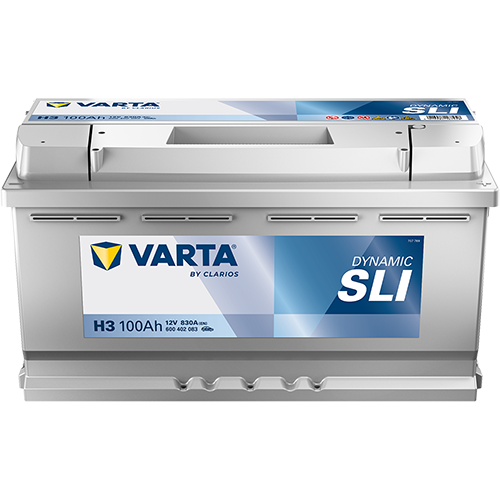
- Capacity (Ah):100 Ah
- Kälteprüfstrom:830 A
- Dimensions (L x W x H):353 x 175 x 190 mm
- Battery technology::Standard (Nass)
- Start-Stop-Betrieb:Nein
- Schaltung:0 (Pluspol rechts)
- Tension:12V
Delivery time approx. 30 days
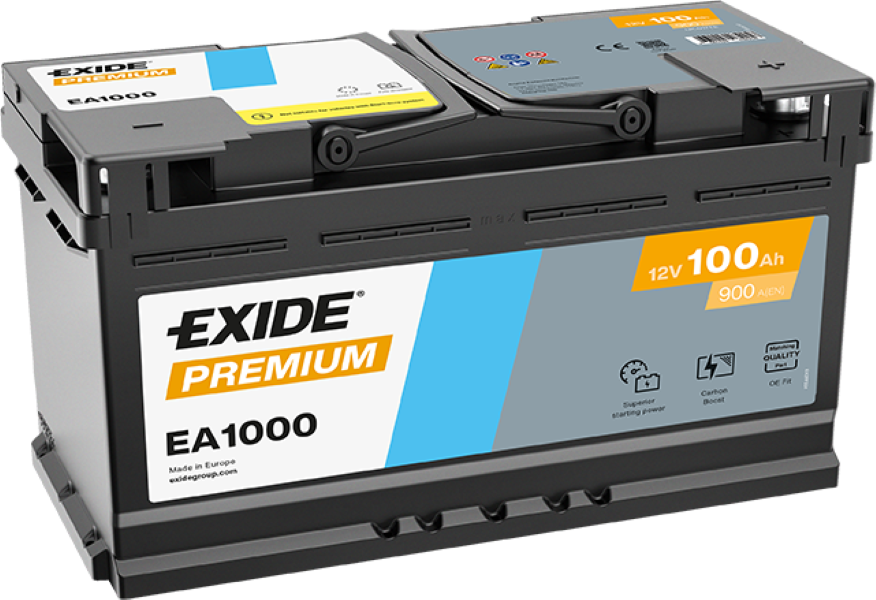

- Capacity (Ah):100 Ah
- Kälteprüfstrom:900 A
- Dimensions (L x W x H):353 x 175 x 190 mm
- Battery technology::Standard (Nass)
- Schaltung:0 (Pluspol rechts)
- Tension:12V
delivery time: Immediately
In Stock
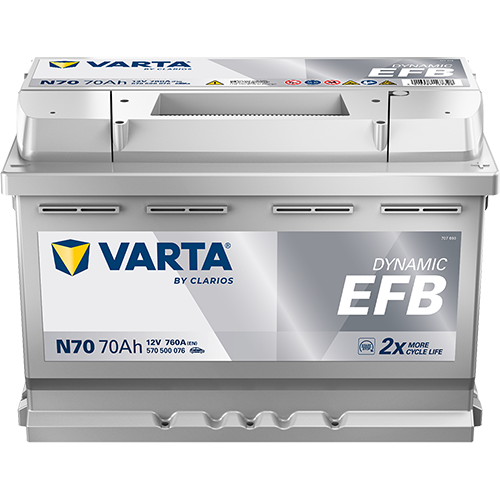
- Capacity (Ah):70 Ah
- Kälteprüfstrom:760 A
- Dimensions (L x W x H):278 x 175 x 190 mm
- Battery technology::EFB (Flüssig)
- Start-Stop-Betrieb:Ja
- Schaltung:0 (Pluspol rechts)
- Tension:12V
Delivery time approx. 30 days
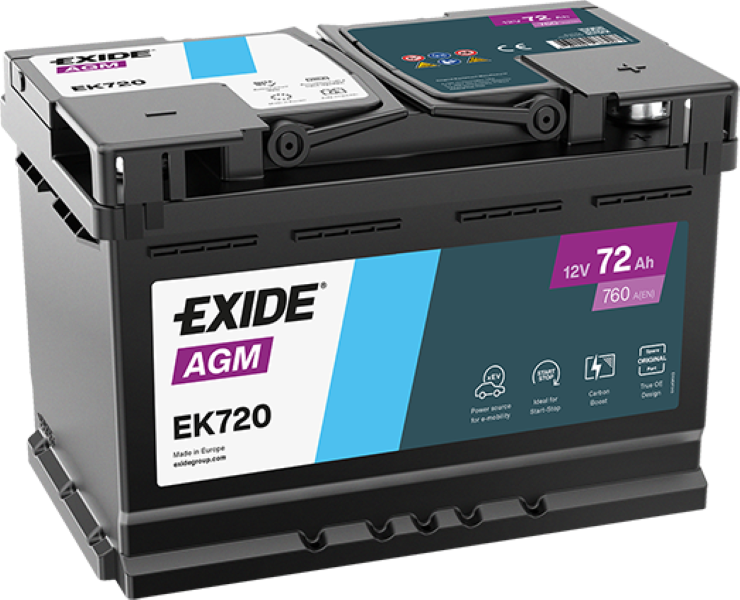
- Capacity (Ah):72 Ah
- Kälteprüfstrom:760 A
- Dimensions (L x W x H):278 x 175 x 190 mm
- Battery technology::AGM (VRLA)
- Schaltung:0 (Pluspol rechts)
- Tension:12V
delivery time: Immediately
In Stock

- Capacity (Ah):70 Ah
- Kälteprüfstrom:760 A
- Dimensions (L x W x H):278 x 175 x 190 mm
- Battery technology::EFB (Flüssig)
- Schaltung:0 (Pluspol rechts)
- Tension:12V
delivery time: Immediately
In Stock

- Capacity (Ah):82 Ah
- Kälteprüfstrom:800 A
- Dimensions (L x W x H):315 x 175 x 190 mm
- Battery technology::AGM (VRLA)
- Schaltung:0 (Pluspol rechts)
- Tension:12V
delivery time: Immediately
In Stock

- Capacity (Ah):80 Ah
- Kälteprüfstrom:800 A
- Dimensions (L x W x H):315 x 175 x 190 mm
- Battery technology::AGM (VRLA)
- Start-Stop-Betrieb:Ja
- Schaltung:0 (Pluspol rechts)
- Tension:12V
delivery time: Immediately
Only %product.stock% In Stock
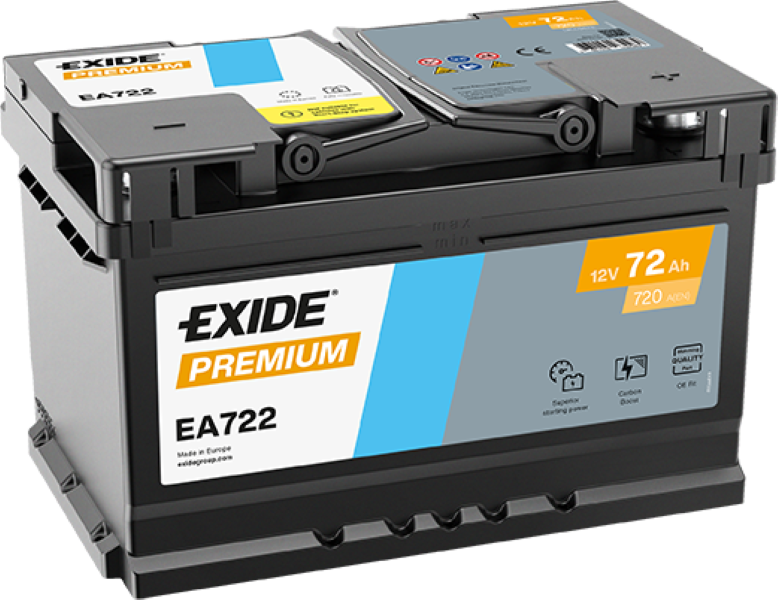
- Capacity (Ah):72 Ah
- Kälteprüfstrom:720 A
- Dimensions (L x W x H):278 x 175 x 175 mm
- Battery technology::Standard (Nass)
- Schaltung:0 (Pluspol rechts)
- Tension:12V
delivery time: Immediately
In Stock
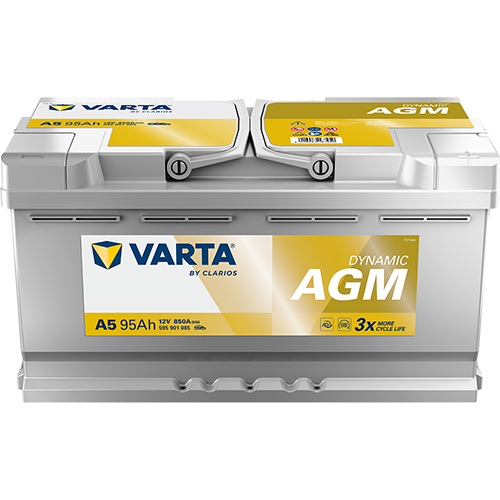
- Capacity (Ah):95 Ah
- Kälteprüfstrom:850 A
- Dimensions (L x W x H):353 x 175 x 190 mm
- Battery technology::AGM (VRLA)
- Start-Stop-Betrieb:Ja
- Schaltung:0 (Pluspol rechts)
- Tension:12V
delivery time: Immediately
In Stock
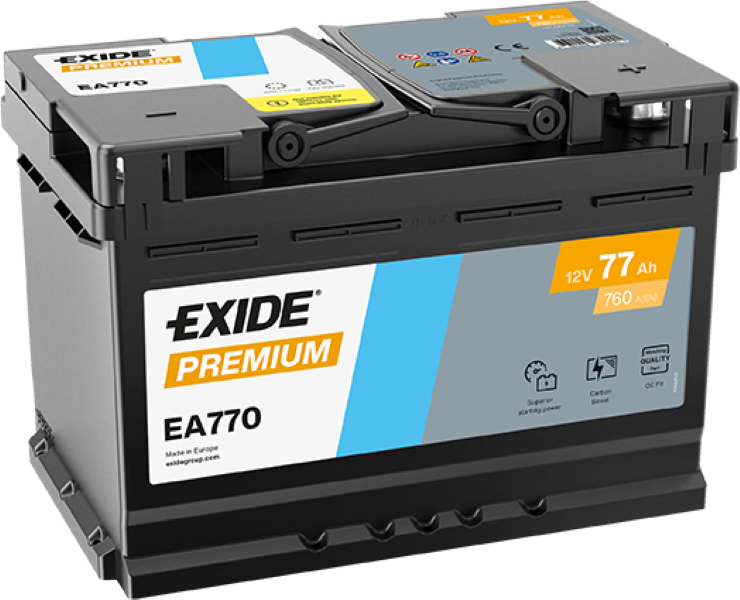
- Capacity (Ah):77 Ah
- Kälteprüfstrom:760 A
- Dimensions (L x W x H):278 x 175 x 190 mm
- Battery technology::Standard (Nass)
- Schaltung:0 (Pluspol rechts)
- Tension:12V
Delivery time approx. 30 days
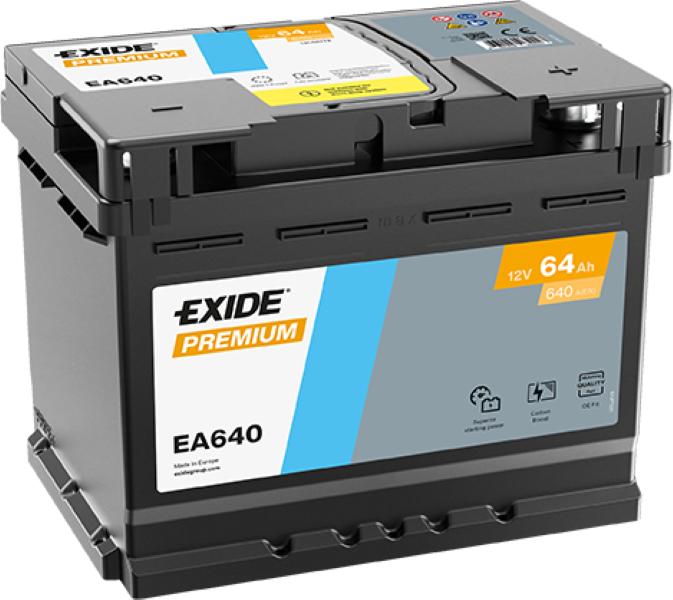
- Capacity (Ah):64 Ah
- Kälteprüfstrom:640 A
- Dimensions (L x W x H):242 x 175 x 190 mm
- Battery technology::Standard (Nass)
- Schaltung:0 (Pluspol rechts)
- Tension:12V
Delivery time approx. 30 days
Not in Stock
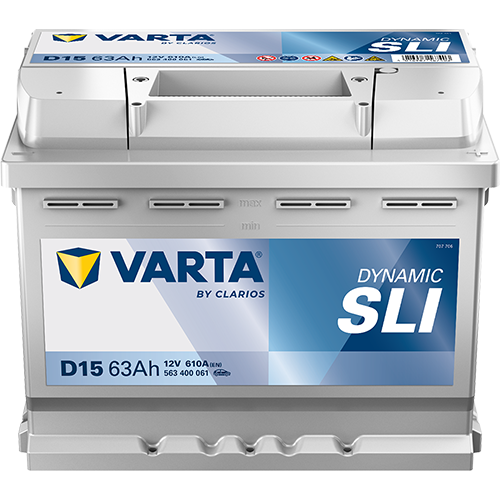
- Capacity (Ah):63 Ah
- Kälteprüfstrom:610 A
- Dimensions (L x W x H):242 x 175 x 190 mm
- Battery technology::Standard (Nass)
- Start-Stop-Betrieb:Nein
- Schaltung:0 (Pluspol rechts)
- Tension:12V
Delivery time approx. 30 days
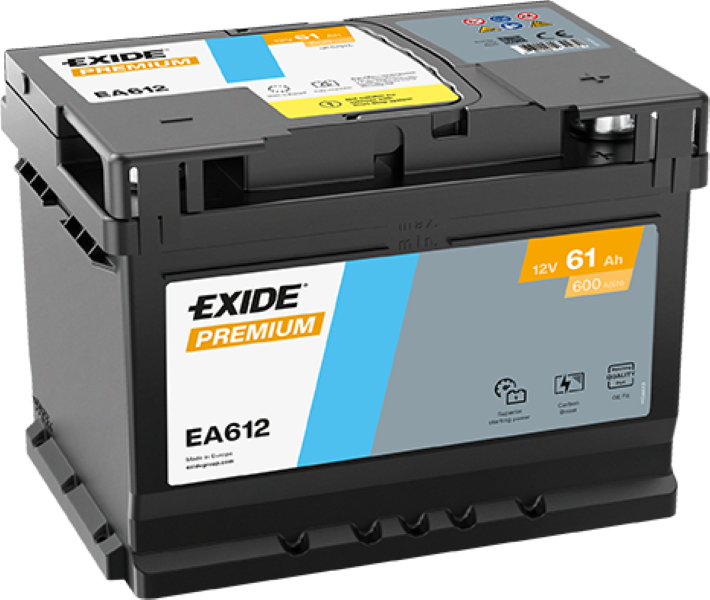
- Capacity (Ah):61 Ah
- Kälteprüfstrom:600 A
- Dimensions (L x W x H):242 x 175 x 175 mm
- Battery technology::Standard (Nass)
- Schaltung:0 (Pluspol rechts)
- Tension:12V
delivery time: Immediately
In Stock
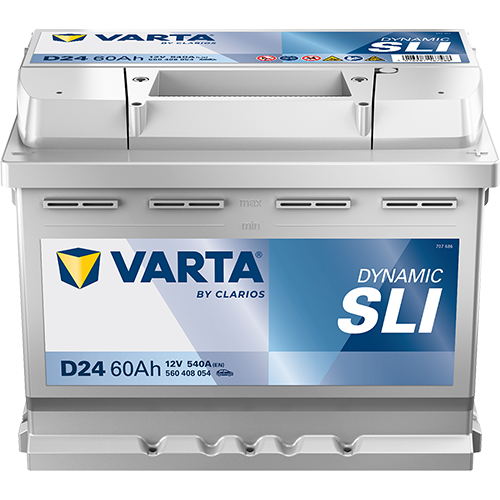
- Capacity (Ah):60 Ah
- Kälteprüfstrom:540 A
- Dimensions (L x W x H):242 x 175 x 190 mm
- Battery technology::Standard (Nass)
- Start-Stop-Betrieb:Nein
- Schaltung:0 (Pluspol rechts)
- Tension:12V
Delivery time approx. 30 days
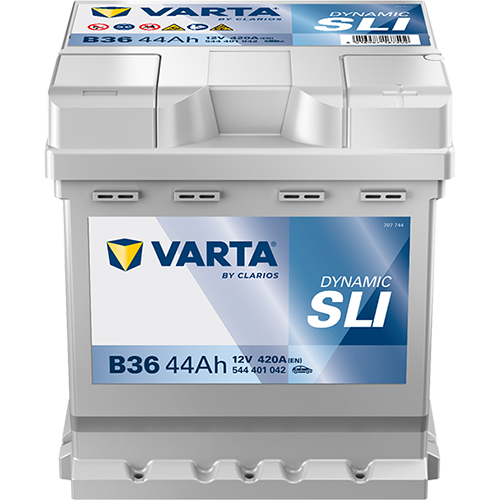
- Capacity (Ah):44 Ah
- Kälteprüfstrom:420 A
- Dimensions (L x W x H):175 x 175 x 190 mm
- Battery technology::Standard (Nass)
- Start-Stop-Betrieb:Nein
- Schaltung:0 (Pluspol rechts)
- Tension:12V
Delivery time approx. 30 days

- Capacity (Ah):77 Ah
- Kälteprüfstrom:780 A
- Dimensions (L x W x H):278 x 175 x 190 mm
- Battery technology::Standard (Nass)
- Start-Stop-Betrieb:Nein
- Schaltung:0 (Pluspol rechts)
- Tension:12V
delivery time: Immediately
In Stock
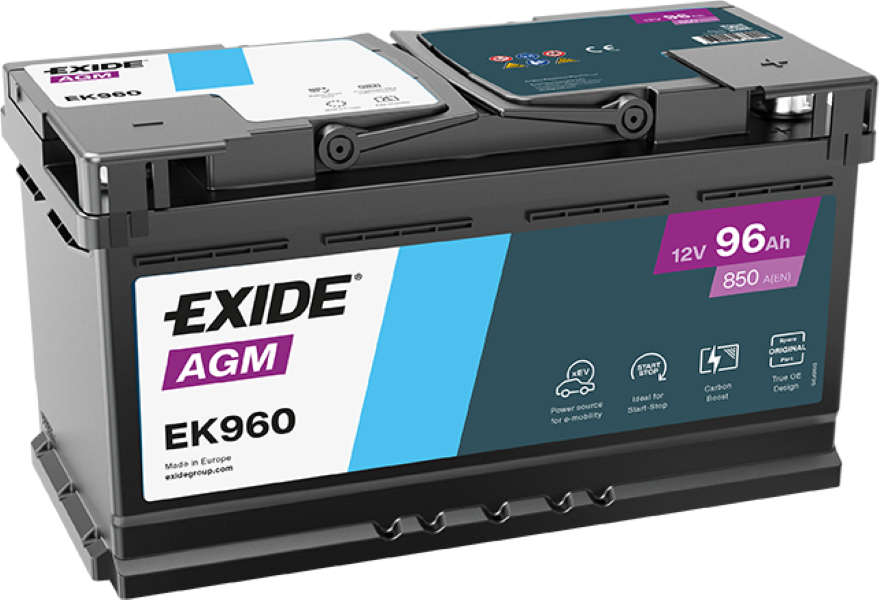
- Capacity (Ah):96 Ah
- Kälteprüfstrom:850 A
- Dimensions (L x W x H):353 x 175 x 190 mm
- Battery technology::AGM (VRLA)
- Start-Stop-Betrieb:Ja
- Schaltung:0 (Pluspol rechts)
- Tension:12V
delivery time: Immediately
In Stock
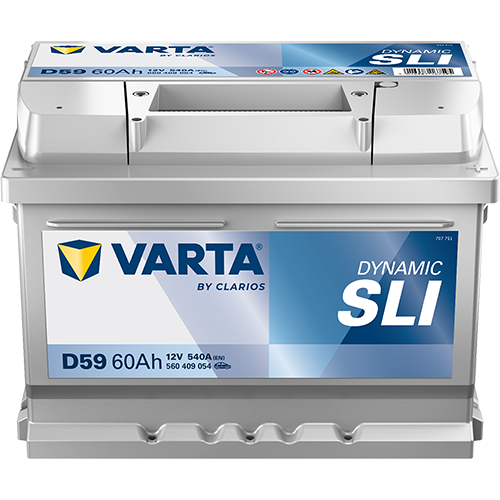
- Capacity (Ah):60 Ah
- Kälteprüfstrom:540 A
- Dimensions (L x W x H):242 x 175 x 175 mm
- Battery technology::Standard (Nass)
- Start-Stop-Betrieb:Nein
- Schaltung:0 (Pluspol rechts)
- Tension:12V
Delivery time approx. 30 days
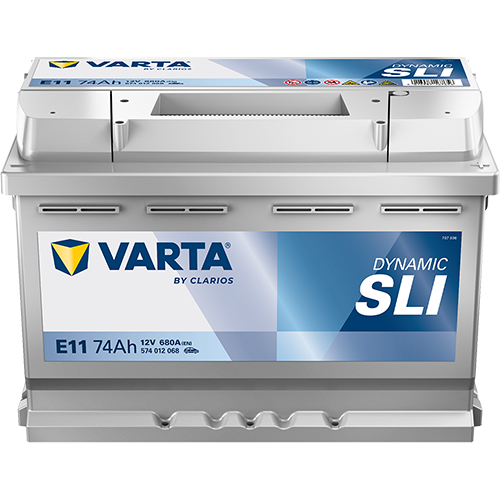
- Capacity (Ah):74 Ah
- Kälteprüfstrom:680 A
- Dimensions (L x W x H):278 x 175 x 190 mm
- Battery technology::Standard (Nass)
- Start-Stop-Betrieb:Nein
- Schaltung:0 (Pluspol rechts)
- Tension:12V
Delivery time approx. 30 days
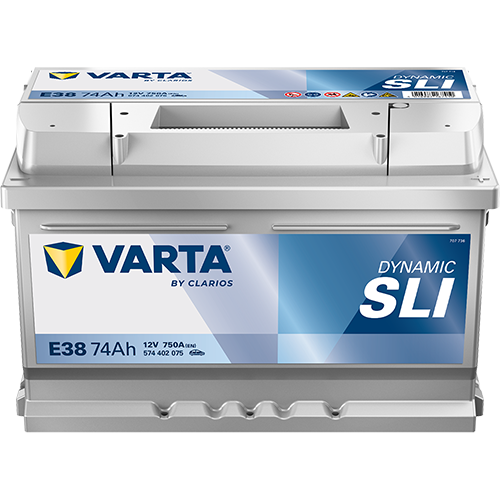
- Capacity (Ah):74 Ah
- Kälteprüfstrom:750 A
- Dimensions (L x W x H):278 x 175 x 175 mm
- Battery technology::Standard (Nass)
- Start-Stop-Betrieb:Nein
- Schaltung:0 (Pluspol rechts)
- Tension:12V
delivery time: Immediately
In Stock
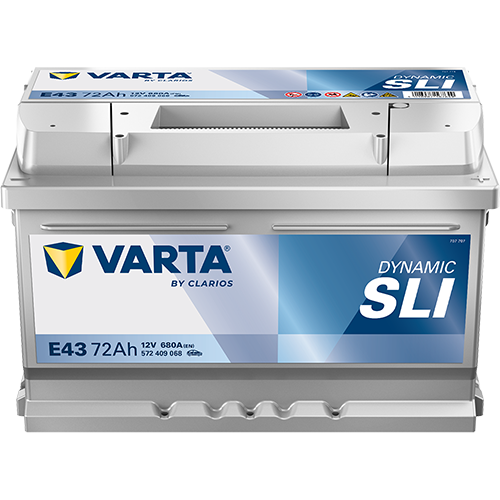
- Capacity (Ah):72 Ah
- Kälteprüfstrom:680 A
- Dimensions (L x W x H):278 x 175 x 175 mm
- Battery technology::Standard (Nass)
- Start-Stop-Betrieb:Nein
- Schaltung:0 (Pluspol rechts)
- Tension:12V
Delivery time approx. 30 days
Not in Stock
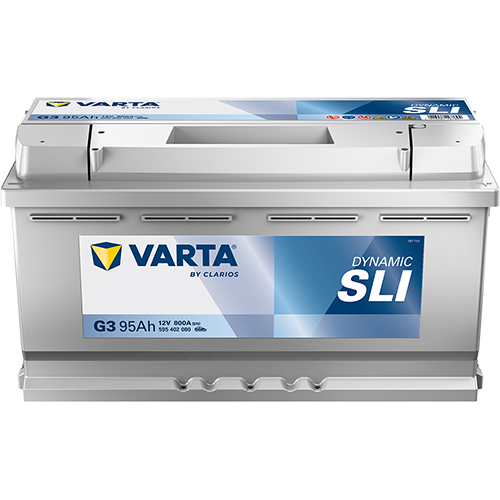
- Capacity (Ah):95 Ah
- Kälteprüfstrom:800 A
- Dimensions (L x W x H):353 x 175 x 190 mm
- Battery technology::Standard (Nass)
- Start-Stop-Betrieb:Nein
- Schaltung:0 (Pluspol rechts)
- Tension:12V
Delivery time approx. 30 days
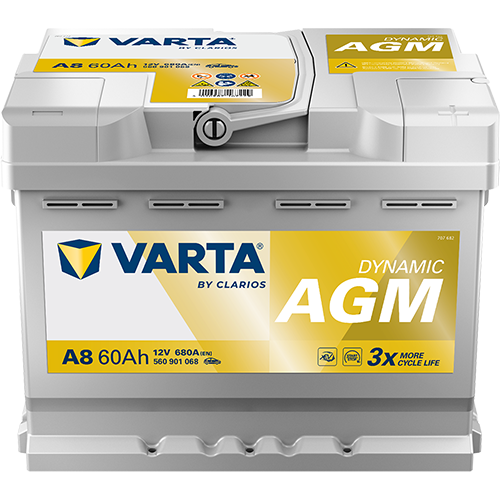
- Capacity (Ah):60 Ah
- Kälteprüfstrom:680 A
- Dimensions (L x W x H):242 x 175 x 190 mm
- Battery technology::AGM (VRLA)
- Start-Stop-Betrieb:Ja
- Schaltung:0 (Pluspol rechts)
- Tension:12V
delivery time: Immediately
Only %product.stock% In Stock
Car battery - Starter battery - Vehicle battery - Accumulator
The car battery, also known as the starter battery, supplies the starter motor with energy to start the combustion engine and provides the power for all electrical processes in the car.
Finding the right car battery for my car
Do you need a new starter battery but don't know which one to buy?
The most reliable way to find a suitable battery is to check the housing dimensions (length x width x height) in mm of the previous battery.
1. open your hood or trunk and take a photo of the battery label and the battery.
2. then enter the battery name or part number on the Internet. As soon as you have found the battery, you will usually also find details of the housing dimensions (length x width x height) in mm. If this does not work, you will need to remove the battery and measure it, or refer to your vehicle's operating instructions.
3. now select the "Car batteries" tab on our website
4. then simply click on the filter: "Dimensions (L x W x H)" and select the dimensions of your previous battery from the drop-down menu .
5. if both battery poles are facing you: Is the positive terminal (red) on the right or left? You can use the "Circuit" filter to select this property according to your previous battery.
6. does your vehicle have automatic start-stop? If so, also enter this in the "Start-stop mode" filter.
If you have followed the procedure as described above, our website will only show batteries that will fit your vehicle.
Make sure by comparing the performance data of the new battery with the data of your old one. Ah (Ampere) and A (cold start value also: "cold test current") should have the same or at least similar values as the previous battery (+- 5% is normal).
Now you can choose your favorite manufacturer, or make your decision based on price or delivery time. DONE!
If you need help or want to find the battery based on the vehicle type, please contact us by phone on 0895 419 6384 - or by e-mail to [email protected] or via our contact form- we will be happy to help you.
Further information:
What technology do car batteries have?
If vehicles do not have a start-stop function, conventional wet batteries are usually used. Modern car batteries are completely sealed and absolutely maintenance-free thanks to a cover system that feeds the acid back into the individual cells. Nevertheless, there are some disadvantages to today's batteries: The charging voltage required is usually 14.8 V. Many alternators can only supply this with great difficulty. In the worst case (battery at the end or defective), there is no way of reactivating modern batteries. We will be happy to give you a general overview of all current technologies:
- Wet cell car batteries also known as "wet batteries" or "lead-acid batteries", are still the most widely used car batteries on the market today. Formerly with fragile glass containers and lead rods inside, they have now become reliable, safe and long-lasting companions thanks to years of research and development, provided they are properly maintained and charged.
- Calcium batteries are very similar to wet batteries in terms of their design principle. The difference, however, lies in the calcium alloy of the positively and negatively charged plates used. This results in a significant, up to 80 percent reduction in fluid loss and the self-discharge rate.
- EFB batteries (enhanced flooded battery) describe the next level of innovation in the field of rechargeable batteries. The difference to conventional wet batteries is the use of a polyfleece material on the surface of the positive plate inside the battery. The main advantages of this technology are a longer service life, a reduction in internal resistance, which allows higher currents, and a doubling of the number of charging cycles. EFB batteries are ideal for compact and mid-range vehicles with start-stop systems and other demanding consumers.
- AGM batteries represent the highest level of technology and development. Instead of water or gel, glass fleece mats are used for electrolyte storage, which results in a significantly longer service life and energy supply for equipment that requires power, as well as a reliable supply for vehicle start-stop systems.
Vehicles with start-stop function
For vehicles with start-stop systems, car batteries with AGM and EFB technology have been used for many years. AGM batteries (Absorbent Glass Mat batteries, VRLA batteries or fleece batteries) are suitable for cyclic use (discharging and charging) and can be charged even more easily - ideal for systems with regenerative braking and for the start-stop function. In view of their good properties in cyclic operation, AGM batteries can also be used, for example, as pure supply batteries in motorhomes and boats. We are happy to address what only a few manufacturers communicate and handle in this way: Please avoid installing an AGM battery in the engine compartment. Temperatures above 55°C can only be tolerated by AGM technology to a limited extent. If this cannot be avoided, insulate the battery as well as possible or choose an alternative.
Which battery is suitable for start-stop and can be installed in the engine compartment (also in the passenger compartment or trunk, of course)?
EFB technology for start-stop use has also been available on the spare parts market for several years. This battery technology has been developed precisely for such tasks: It is strongly based on conventional wet technology, but is much more cycle-resistant and therefore also practical for pure supply. Easy to charge, good cycle stability and heat resistance - ideal for start-stop vehicles that have a battery installed in the engine compartment.
EFB batteries as a replacement for normal car batteries?
The conventional wet-cell battery can and may also be replaced by the EFB car battery. Why? - It is just as suitable for cars with many consumers and generally high-quality cars. Gel batteries are ONLY produced as starter batteries for motorcycles, not as starter batteries for cars.
Original branded batteries or no-name products?
Are there big differences between brand manufacturers and no-name batteries?
The principle "expensive does not necessarily mean better" also applies to car batteries. Our range consists exclusively of products that we can recommend without reservation - there are no battery brands or types with which we have had bad experiences. A further sale under such circumstances would not make sense.
Regardless of whether it is an original brand battery from Varta, Exide, Bosch or Banner or a cheap alternative battery, we at Voltimax.de always try to offer our customers a fair price-performance ratio. At Voltimax.co.uk you can conveniently compare prices online and find the best and cheapest car battery for your vehicle from our extensive range of batteries!
The right care for your car battery
Maintenance-free - sealed - closed - non-refillable - you read and hear all this about the latest car batteries. An important question in this context is where does maintenance end and care begin?
One of our recommendations is to maintain your car battery and not to service it. Maintenance includes checking the acid level and topping up with distilled water. This is neither possible nor necessary for sealed batteries. However, you should maintain your battery by recharging it regularly.
Regularly means at intervals of 4-12 weeks and not just when the battery is already starting to weaken or the engine no longer starts.
To do this, you can charge your car battery with almost any charger to "fully" charge it again. You do not need modern technology such as workshops or battery dealers. Proper care is crucial for the service life of your car battery, as it can at least double its service life. The condition of your car battery deteriorates the longer you wait to recharge it. At the same time, it becomes increasingly difficult for standard chargers for domestic use (CTEK) to recharge your battery at all!
The problem of sulphation
Batteries that frequently run at low voltages of less than 80% often exhibit acid stratification. This means that the sulphuric acid in the battery settles at the bottom and the water collects on top. This impairment in the electrolyte mixture means that the charging and discharging function of the battery is significantly restricted and the capacity of the battery drops rapidly. The result of this is known as sulphation. Sulphate crystals form as a result of the acid damage, which settle on the plates installed in the battery and clog their pores. As a result, lead sulphate can no longer be reconverted and the charge absorption and cold start performance drop significantly!
However, modern chargers, such as the chargers from CTEKwhich can often recondition your batteries fully automatically and in several stages and, thanks to several special functions, can also help to prevent sulphation occurring, significantly increasing the service life of batteries.
The performance of the alternator
If you have the objection that recharging is actually carried out by the alternator, we can only tell you that you are wrong! The alternators do recharge the car batteries, but only in very few cases. The fully charged state of your battery will never really be reached unless you drive 500 kilometers in your vehicle every day. In the past, there were far fewer electronics, the batteries required a lower charging voltage, etc. Nowadays this is no longer the case (and you can take our word for it 100%): Most batteries that are complained about are simply discharged. There are several reasons why car batteries often don't last 5 years. These include short and medium distances (up to approx. 150 km/day), numerous starts of the car, more consumers on board (auxiliary heating, seat heating, air conditioning, etc.) and sometimes simply too weak alternators (too low voltage - the current is always more than sufficient).
Trust us - recharge your battery!
A very simple charger is often sufficient here - it doesn't have to be an expensive one (e.g. Paco chargers)
Installing and removing a car battery
Access to the starter battery in a car or truck is normally relatively easy. The battery is usually located on the side in the engine compartment or in the trunk under the cover. In some modern cars, on the other hand, it is more complicated to replace the battery if it has to be programmed into the vehicle electronics. In this case, we recommend contacting your trusted garage.
For all those who want to change their car batteries themselves, we recommend using a device that maintains the 12V on-board voltage by connecting it to the cigarette lighter - in many cases, chargers such as those from CTEK for example. By continuing to supply power to the vehicle, it is largely possible to prevent the radio and other things from being reset. In the vast majority of cases, this also prevents the battery from having to be taught in again.
When replacing the battery, make absolutely sure that both the engine and all power consumers are switched off.
First disconnect the negative terminal of the old battery and then the positive terminal. When installing the new battery, please leave the protective cap over the positive terminal until the battery is firmly seated in the car. Now connect the positive terminal first and then the negative terminal.
Make sure that the terminal clamps are secure. Also check that the gas outlet opening of the battery is not closed. It is located on the top cover on both narrow sides. One side must be open and the other closed. A degassing hose can be connected to the open side. However, this is not a must for completely sealed and maintenance-free batteries.